
Animal Glues
Ancient Wood Glue For Modern Woodworking
by Chris Black
Traditional animal glues for woodworking are made from processed animal skin and bones. These natural protein glues are chemically similar to gelatin and are relatively safe to use. Unlike the bottled liquid variety, traditional animal glue comes dry in granular form. Contrary to popular belief, traditional animal glues, which have been in use for centuries, are extremely tough and durable.
So what place does an "old-fashioned" glue have in the modern woodworking workshop? Animal glue is unbelievably strong. Suspect wood joints, such as end grain miters, benefit from animal glue. Although fully cured in 24 hours, animal glue tacks up and sets fast, meaning less clamping time. In fact, most joints can be rubbed together until the glue squeezes out and then left to dry without clamps. You can even veneer without clamps, cauls, presses or vacuum bags. Chairmakers will find this fast-grab property indispensable.
Animal glue is reversible. If you misalign a joint or damage a piece, you simply apply moist heat and the joint comes apart. Steam or wrap a boiling hot towel around the area, wait and twist. Presto! Repairs can take place years later with no ill effect.
To get animal glue into a usable state it must be heated. An Electric Glue Pot or any double boiler arrangement with a temperature control will do.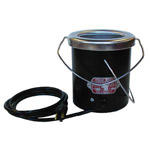 Start by dumping a couple of handfuls of dry glue into a glass or plastic jar. NOTE: Some metals, particularly copper, will react with animal glue and weaken it. Now, cover the glue with water. Within an hour or so the glue will absorb the water and swell into a thick mass. At this point, place the container full of glue intro the glue pot, fill with water until it reaches close to the top of the jar and turn on the heat. If you're not using a glue pot, make sure your heat source does not exceed 145°F - check frequently with a meat thermometer. Throughout the course of the day you will add hot water from the pot into the glue to maintain viscosity and to replace evaporated moisture.
Animal glue is applied with a brush or flat stick. Discard any unused glue at the end of the day. Keeping dissolved animal glue around for longer periods of time causes bacteria to grow, reducing the glue's strength.
- Hide Glue (166011) - A general purpose woodworking glue. Good for joinery and veneering.
- Rabbit Skin Glue (310124) - The most viscuous and elastic animal glue. Ideal as a primer coat for gilding and crackled paint effects.
- Bone Glue (310123) - Hardest bonding of the three. Use to minimize creep.