Trunk Wood versus Limb Wood
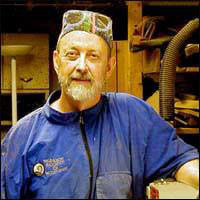
by Phil Colson
Woodturner
"Life is too short to turn crappy wood" – John Jordan. This is so true. When I pick up a piece of wood or turn it over, I look to see where the pith at the center of the growth rings is in the piece. If it is close to the edge of the log, it is most probably a limb. That's because when a limb grows from the trunk outwards, it grows more xylem (structural material) on the bottom of the limb to support the weight as it grows. The limb is under great tension as it supports its own weight against gravity, and also handles winds, snow and ice. When you turn limb wood, the tension is released and maximum movement is the result. After turning a piece of limb wood, greater warping will result. Now understand I don't turn my nose up at limbs. Some of my best pieces have come from limbs that have plenty of character. Natural edged bowls are a great use for limb wood where I know the warping will add to the characteristic shape of the piece.
Well you say, I'll just turn trunk wood. Doing that doesn't necessarily make it all that easy however, as trunk wood may have an inherent structural problem also. When a tree has been moved by high winds or constant winds throughout its life, shake can happen. A shake is the separation of the growth rings in various places in the trunk.
I remember turning a piece of walnut at John Campbell Folk School a few years back. I didn't look closely enough at the workpiece before mounting it and start turning. Because it contained too much shake, the piece flew apart, taking out the overhead light and a pane of glass in the window. With only part of the workpiece still attached, the lathe immediately became so out of balance while running at too high a speed that it started walking across the room. I hit the floor and then reached up and stopped the lathe. All the other turners headed for the door.
Trunk wood is more stable than limb wood and shrinks more consistently. Just be sure to examine the wood carefully for evidence of shake before you mount it on the lathe. Happy turning.
Phil can be reached directly via email at
woodturnerphil@gmail.com.
Take a look at
Highland Woodworking's great selection of Woodturning products
Return to
The Highland Woodturner
front page