How To Care For A Hand Saw
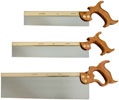
How To Care For A Hand Saw
With the right tools and some effort your hand saws can maintain their peak performance for years to come! Roy Underhill couldn't get through a day without using a hand saw whether for sawing, sharpening or just goofing around! Watch his entertaining Hand Saw Sharpening Video for inspiration. You can learn everything you need to know about hand saws and saw sharpening techniques in Keeping the Cutting Edge: Setting & Sharpening Hand & Power Saws by Harold "Dynamite" Payson. As with most fine hand tools, hand saws just require a little reasonable care to maintain their condition and performance.
Caring For A Fine Hand Saw
Stop! Before you take the first stroke with your new hand saw, get out your pencil and a hearty piece of poster board or thick paper and make a template of the exact tooth position. Straight from the manufacturer the teeth are correctly shaped and the tracing will be a great reference for you down the road when the saw teeth are out of whack. Store the template in a safe place so that you always have it on hand.
Cleaning
- Remove Manufacturer's Lacquer
Fine hand saws are typically shipped with a light oil coating to prevent corrosion, but some economical hand saws may be shipped with a protective lacquer which needs to be remove with lacquer thinner. You may notice it as a slight yellowish film on the plate or creating a drag in the cutting action.
- Fine Sanding
Keep your saw blade free from spots of corrosion. Fine (0000) steel wool will not damage or scratch the plate, but avoid for any etchings on the blade you want to keep.
Preventing rust and corrosion
- Oiling
It is good to always keep a light coat of Camellia Oil on a saw blade when not in use.
- Rust inhibiting paper, Ferro-pak Sheets
Fighting rust in the woodshop can be a constant battle for those living in humid environments. Rust inhibiting paper assists in keeping your hand saws free of rust without leaving a greasy or waxy residue. Simply wrap your saws in the paper before storing and store them in the driest place possible.
Sharpening
Sharpening a hand saw may not be your favorite workshop task, but it is rewarding when the job gets done. This is just a general outline to get you started with hand saw sharpening. Countless articles and books have been written on the saw sharpening topic and we encourage you to learn more about proper saw sharpening techniques. Harold Payson has put together a easy guide on Setting And Sharpening Hand And Power Saws and in just 30 pages you can learn the ins an outs of jointing, setting and filing hand saws...and other blades. Some folks will tell you to always joint, set, file, but others say set, joint, file - over time, with experience you will learn what work best for you, but we come down on the the set first side before jointing to assure that the tops of the teeth will all be at the exact same height and cut in the same plane.
- Clamp Securely
Clamp the hand saw in a solidly mounted vice so it is secure and both hands are free.
- Setting
Setting saw teeth puts teeth back in alignment, making sure the kerf is the proper width. Setting the teeth is done with the use of an actual Saw Set Tool - they come pistol-grip and straight and in various sizes. We prefer pistol-grip saw sets and we offer them in three sizes:
Kunz Small Saw Set - For crosscut and rip saws with 4-13 tpi. Accommodates saws up to 3/32" thick including set.
Fine Saw Set - For setting teeth on western style hand saws from 13 to 27 tpi.
Coarse Saw Set - For setting teeth on western style hand saws from 4 to 12 tpi.
- Jointing
Simply put, jointing means getting all the teeth the same height. Using a 8" Mill Bastard File run level across the full row of teeth. To stay square, make a jig to hold the file or get a Veritas Jointer Jig. One pass should do it, but if you see lots of teeth still short, give it a second pass. It is OK if some teeth remain short, after another sharpening or two all the teeth will level out. With experience and careful filing, jointing will become a lesser issue.
- File Size
Nicholson 7" Slim Taper File - For saws 5 to 7 tpi.
Nicholson 7" Double Extra Slim Taper File - For saws 10 to 13 tpi.
Nicholson 4" Extra Slim Taper File - For saws 16-20 tpi.
Nicholson 6" Double Extra Slim Taper File - For saws 13 to 16 tpi.
Shop for The World's Best Hand Saws.
Watch a quick video about Bad Axe Hand Saws.
Watch our Roy Underhill Saw Sharpening Demonstration.
Learn information about How to Resharpen a Japanese Ryoba’s Rip Teeth.
